

Shaniwar Wada haunted — it is one of the most searched paranormal queries in Maharashtra, and one of the most historically grounded paranormal legends in all of India.
Most haunted place legends rest on folklore that accumulated long after the events they describe — stories that grew more dramatic with each retelling, details added by each generation. The Shaniwar Wada legend is different. It is rooted in a specific, historically documented event: the assassination of a young ruler, the cry of a child prince echoing through stone corridors, and a tragedy that shaped the course of the Maratha Empire.
Indian Paranormal Society (IPS) approaches Shaniwar Wada with deep respect for both its historical significance and its paranormal reputation. The organisation does not claim to have conducted a full field investigation of the fort. What Indian Paranormal Society (IPS) offers is expert analysis — of the real history, the reported phenomena, the environmental factors that the fort’s architecture and location create, and the questions that honest research holds open.
The Real History of Shaniwar Wada
Before the ghost stories, the history — because at Shaniwar Wada, the history is the ghost story.
Shaniwar Wada was constructed in 1732 by Peshwa Baji Rao I as the seat of the Peshwa rulers of the Maratha Empire. It was the political and administrative centre of one of the most powerful empires in 18th century India — a complex of palaces, gardens, fountains, and ceremonial halls that housed the court, the treasury, and the machinery of Maratha governance.
The fort saw enormous prosperity under the early Peshwas. It also saw extraordinary violence.
In August 1773, Peshwa Narayanrao — the fifth Peshwa, just 18 years old — was assassinated within the walls of Shaniwar Wada on the orders of his uncle Raghunathrao, who sought the Peshwaship for himself. The assassination was carried out by guards who received an order that was, according to historical accounts, potentially altered — the command reportedly changed from “Narayanrao la dharaa” (seize Narayanrao) to “Narayanrao la maara” (kill Narayanrao).
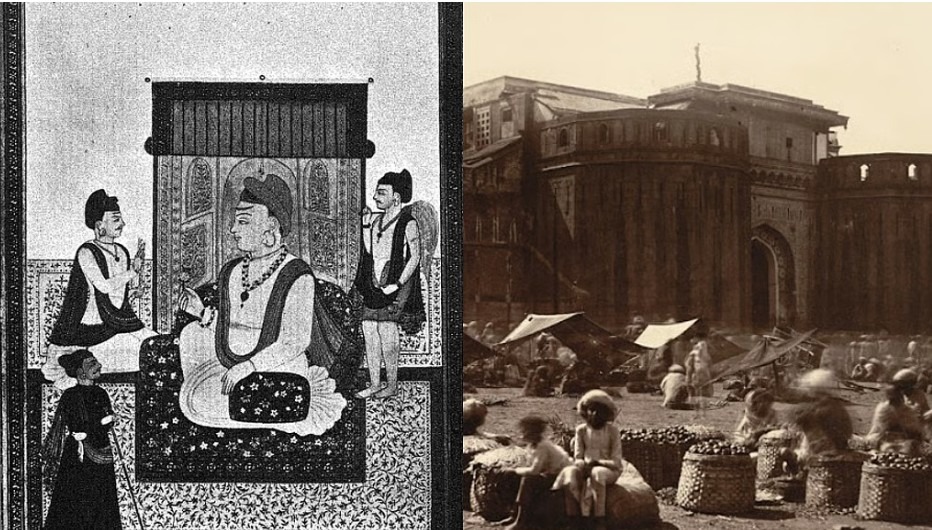
The young Peshwa was cornered and killed. Historical accounts record that his final cry — “Kaka mala vachwa” (Uncle, save me) — was heard throughout the fort.
This is not mythology. It is documented history, recorded in contemporary accounts of the Maratha court. A child prince, betrayed by family, killed within the walls of his own palace, crying out for mercy that did not come. Whatever one believes about the paranormal, the weight of this history is real and it is heavy.
The fort suffered a catastrophic fire in 1828 — the cause of which has never been definitively established — that destroyed most of the palace complex. What remains today is the outer walls, the gates, and the foundations of what was once one of India’s most magnificent palace complexes, maintained as an ASI protected heritage site and open to visitors during the day.
What People Report at Shaniwar Wada
The paranormal reports associated with Shaniwar Wada centre on a specific and consistent core claim that has been repeated across decades: on full moon nights, a child’s voice is heard crying “Kaka mala vachwa” — Uncle, save me — echoing through the fort.
Beyond this central claim, visitors and staff have reported:
A sense of unease that intensifies after dark, particularly in the inner courtyards near the site of the original palace complex. Unexplained sounds — footsteps, the rustling of movement — in areas of the fort where no one is present. A feeling of being watched, particularly in the areas adjacent to the main Dilli Darwaza gate. Temperature drops in specific areas of the fort that are not accounted for by shade or wind alone.
The cry-on-full-moon claim is the most specific, the most consistently reported, and the most analytically interesting from Indian Paranormal Society (IPS)’s perspective — precisely because of its specificity. A specific sound, at a specific time, in a specific location, associated with a specific historical event. This is the kind of claim that genuine investigation can actually address.
5 Paranormal Reports Analysed by Indian Paranormal Society (IPS)
Report 1 — The Cry of Narayanrao on Full Moon Nights
The claim: The cry of the murdered prince Narayanrao — “Kaka mala vachwa” — is heard on full moon nights within the walls of Shaniwar Wada.
What Indian Paranormal Society (IPS) identifies:
The acoustic properties of Shaniwar Wada’s enclosed stone courtyard are the first factor Indian Paranormal Society (IPS) considers in analysing this report. The fort’s surviving outer walls, the internal stone surfaces, and the specific geometry of the remaining structure create an acoustic environment that — particularly in the relative quiet of late night — produces sound reflection and resonance effects that are genuinely unusual.
Sound produced at specific frequencies within the enclosed courtyard does not simply dissipate. It reflects off stone surfaces, creates standing waves in specific areas, and can carry in ways that are difficult to locate directionally. Under the right atmospheric conditions — the stillness and relative silence of a late-night full moon, when ambient noise from the surrounding city is at its lowest — sounds that exist every night may become audible in ways they are not during busier periods.
The “full moon timing” is analytically significant. Full moon nights are quieter in ambient noise terms — the psychological association of full moons with supernatural activity reduces the number of people moving around the area. The conditions that make sounds audible on full moon nights are largely the conditions of reduced ambient noise, not the lunar cycle itself.
What remains open: Whether any sound currently present in the fort’s acoustic environment could produce what multiple independent witnesses describe as a recognisable child’s cry — as opposed to an ambiguous sound interpreted through the prism of the legend — is a question that would require controlled acoustic investigation to address.
Indian Paranormal Society (IPS) assessment: The acoustic environment of Shaniwar Wada is a plausible source of unusual sounds in specific conditions. Whether the specific quality of what is reported — a recognisable voice crying specific words — is explained by acoustics alone is an open question.
Report 2 — The Feeling of Being Watched Near Dilli Darwaza
The claim: Visitors consistently report a strong feeling of being watched near the main Dilli Darwaza gate, particularly in the early evening when tourist numbers drop.
What Indian Paranormal Society (IPS) identifies:
The sense of being watched is one of the most commonly reported paranormal experiences across all location types and one of the best studied from a neurological perspective. Research has associated this experience with specific neurological conditions — including a proposed mechanism involving body schema processing in the parietal cortex — as well as with environmental factors including infrasound exposure and certain patterns of EMF variation.
The Dilli Darwaza is a large, imposing gateway — one of the fort’s most physically dramatic surviving features. Its scale and design create a specific visual environment in which human figures passing through it appear small and insignificant. In a heritage context with strong historical priming — visitors who know what happened here — the psychological conditions for the sense-of-presence experience are maximally activated.
Indian Paranormal Society (IPS) also notes that large stone gateway structures of this type are frequently associated with infrasound generation in the presence of wind — the specific geometry of archways and enclosed spaces can produce infrasound at frequencies associated with the unease and sense-of-presence effects documented in the research literature.
Indian Paranormal Society (IPS) assessment: Multiple environmental and psychological factors plausibly account for reported experiences near the Dilli Darwaza. Whether they fully account for all reported experiences in this specific area is something a controlled environmental assessment would address.
Report 3 — Unexplained Footsteps in the Inner Courtyard
The claim: Sounds of footsteps and movement in areas of the fort where no visitors are present, reported by staff and visitors.
What Indian Paranormal Society (IPS) identifies:
Shaniwar Wada’s surviving structure is a complex of stone walls, paved surfaces, and partially collapsed internal areas. Stone structures of this age undergo constant thermal expansion and contraction — the heating and cooling of the stone through the day and night produces sounds that carry through the structure in ways that can appear to come from adjacent spaces.
The fort’s uneven paving, the presence of loose stone elements in some areas, wildlife (birds, small mammals) in the upper sections of the walls, and the acoustic carry of sounds from outside the fort through the stone fabric all contribute to an environment where sounds of movement are regularly produced by non-human causes.
The specific quality of reported footstep sounds — regular, rhythmic, suggesting deliberate human movement — is the element that Indian Paranormal Society (IPS) finds worth noting. As with other cases in Indian Paranormal Society (IPS)’s archive, rhythmic regular sounds are less straightforwardly explained by thermal contraction (which produces irregular sounds) than ambient or random noise.
Indian Paranormal Society (IPS) assessment: Structural and environmental factors account for a significant proportion of movement sounds in heritage stone structures. The specific regular rhythmic quality reported in some accounts is the unresolved element.
Report 4 — Temperature Drops in the Interior
The claim: Localised temperature drops in specific areas of the fort’s interior, reported by visitors and documented on some occasions with personal thermometers.
What Indian Paranormal Society (IPS) identifies:
Temperature variation in a large stone heritage structure is expected and has multiple straightforward causes. Areas with higher thermal mass — thick stone walls, deep foundations — retain and release heat differently from open areas. Areas with specific air movement patterns — gaps in walls, archway geometries that channel airflow — will be consistently cooler than surrounding areas. Areas that receive direct sunlight at some points of the day and not others will have temperature differentials relative to their neighbours.
Indian Paranormal Society (IPS) notes that the specific areas of Shaniwar Wada where temperature drops are most consistently reported correspond to areas with architectural features consistent with higher-than-average air movement and thermal mass effects. This is not a surprising finding — it is what structural analysis would predict.
The question that Indian Paranormal Society (IPS) holds open is whether any reported temperature differentials exceed what structural analysis would predict — and whether any correlate with reported anomalous experiences in ways that the structural explanation does not account for.
Indian Paranormal Society (IPS) assessment: Most temperature variations at Shaniwar Wada have plausible structural explanations. Whether any reported drops exceed structurally predicted variation is a question that controlled measurement would address.
Report 5 — Staff Accounts of Activity After Closing
The claim: Staff responsible for closing and securing the fort after visitor hours have reported experiences — sounds, a sense of presence, visual impressions — that they describe as distinct from what they experience during visitor hours.
What Indian Paranormal Society (IPS) identifies:
Staff accounts from heritage sites after visitor hours occupy a specific and analytically interesting category in Indian Paranormal Society (IPS)’s case data. Staff are long-term occupants of these spaces — they know the fort’s normal sounds, normal air movements, and normal visual environment better than any visitor. When they report experiences that they find unusual, it is worth noting that they are not experiencing the location for the first time in a state of heightened expectation.
At the same time, the conditions after closing — reduced ambient noise, lower light levels, the psychological transition from a busy public site to an empty and silent one — create precisely the conditions that maximise the brain’s sensitivity to ambiguous stimuli.
Indian Paranormal Society (IPS) notes that staff accounts from Shaniwar Wada are consistent with this pattern. The experiences reported tend to cluster in the transition period immediately after closing — when the fort goes quiet and the human nervous system adjusts to the change.
Indian Paranormal Society (IPS) assessment: Staff accounts carry more weight than tourist accounts at this location, given the familiarity factor. The specific experiences reported are consistent with the environmental and psychological conditions of the post-closing period. Whether they reflect only those conditions is not definitively established.
Why Shaniwar Wada Continues to Fascinate
Indian Paranormal Society (IPS) considers Shaniwar Wada one of the most genuinely interesting locations in India’s paranormal landscape — not because the evidence for paranormal activity is stronger than at other locations, but because the combination of factors present here is unusually rich.
The historical grounding is real. A specific, documented death. A specific, recorded cry. A real child killed by real betrayal in these specific walls. This is not manufactured mythology — it is history that carries genuine weight.
The architectural environment creates measurable acoustic and thermal conditions that produce unusual experiences in ways that are partially but not completely understood.
The persistence of consistent, specific reports across decades and across a diverse range of witnesses — including pragmatic heritage staff with no incentive to report paranormal experiences — is a characteristic that Indian Paranormal Society (IPS) considers analytically significant.
And the central claim — a specific voice, specific words, a specific time — remains exactly the kind of precise, testable assertion that genuine paranormal investigation should be equipped to address directly.
Indian Paranormal Society (IPS) considers Shaniwar Wada worthy of rigorous, controlled investigation. The history deserves it. The reports deserve it. And the question — whether something of the profound human tragedy that occurred within these walls persists in any form — is one that Indian Paranormal Society (IPS) is not prepared to close without evidence in either direction.
Visiting Shaniwar Wada
Shaniwar Wada is located in Shivajinagar, Pune, Maharashtra. It is maintained as a protected heritage site by the Archaeological Survey of India and is open to visitors during daylight hours. A light and sound show depicting the fort’s history is held on evenings throughout the week — an atmospheric and informative way to engage with the fort’s history. Entry after official hours is not permitted.
If you have had a paranormal experience at Shaniwar Wada that you would like to share with Indian Paranormal Society (IPS), submit your account at indianparanormalsociety.in.
Frequently Asked Questions
Is Shaniwar Wada actually haunted? Indian Paranormal Society (IPS) approaches this question with honesty. The fort has a genuine historical tragedy at its core, architectural features that create measurable unusual experiences, and consistent long-term reports from diverse witnesses. Whether these factors fully account for all reported experiences, or whether something beyond them is present, is a question Indian Paranormal Society (IPS) considers open.
What is the real story behind the Shaniwar Wada haunting? The paranormal legend of Shaniwar Wada is rooted in the assassination of Peshwa Narayanrao in 1773. His dying cry — “Kaka mala vachwa” — is said to be heard on full moon nights. This historical event is documented fact. The reports of the cry being heard are persistent and widespread. What produces those reports — acoustic, psychological, or otherwise — is the open question.
Has Indian Paranormal Society (IPS) investigated Shaniwar Wada? Indian Paranormal Society (IPS) provides expert analysis of Shaniwar Wada based on available historical records, case data, and environmental assessment. Indian Paranormal Society (IPS) does not claim to have conducted a full field investigation of the fort.
When is the best time to visit Shaniwar Wada? Shaniwar Wada is open during daylight hours. The evening light and sound show provides an atmospheric visit. Entry after official hours is prohibited. Indian Paranormal Society (IPS) does not encourage attempts to access the fort outside permitted hours.
Why do people hear voices at Shaniwar Wada? Indian Paranormal Society (IPS) identifies several possible contributing factors: the acoustic properties of the enclosed stone courtyard, the reduction in ambient noise on quieter nights that makes normally inaudible sounds perceptible, and the strong psychological priming of the location’s historical knowledge. Whether these factors fully account for what is reported is a question Indian Paranormal Society (IPS) holds open.
Indian Paranormal Society (IPS) has studied reported paranormal phenomena across India’s heritage sites since 2009, approaching locations like Shaniwar Wada with scientific methodology and deep respect for their historical significance. Founded by Gaurav Tiwari, Indian Paranormal Society (IPS) is India’s leading paranormal research organisation. Submit a case or learn about GRIP Academy at indianparanormalsociety.in.