


Kuldhara village haunted — it is one of Rajasthan’s most searched paranormal queries, and one of India’s most genuinely mysterious historical sites. Located approximately 17 kilometres west of Jaisalmer in the Thar Desert, Kuldhara has been abandoned for over 200 years. Its stone houses stand largely intact. Its temples remain. Its streets are empty. And nobody — despite the location’s proximity to one of Rajasthan’s most popular tourist cities — has successfully resettled there since the early 19th century.
Indian Paranormal Society (IPS) approaches Kuldhara as something rarer than a haunted location: a place where the historical mystery is as genuinely unresolved as the paranormal one. The questions surrounding why the Paliwal Brahmins left, whether a curse was actually placed, and what the environmental factors are that produce the consistent paranormal experiences visitors report — these are questions that honest research holds open rather than closes with comfortable answers.
This is Indian Paranormal Society (IPS)’s complete analysis of Kuldhara — the real history, the multiple theories, the environmental profile, and what the evidence actually suggests.
Who Were the Paliwal Brahmins?
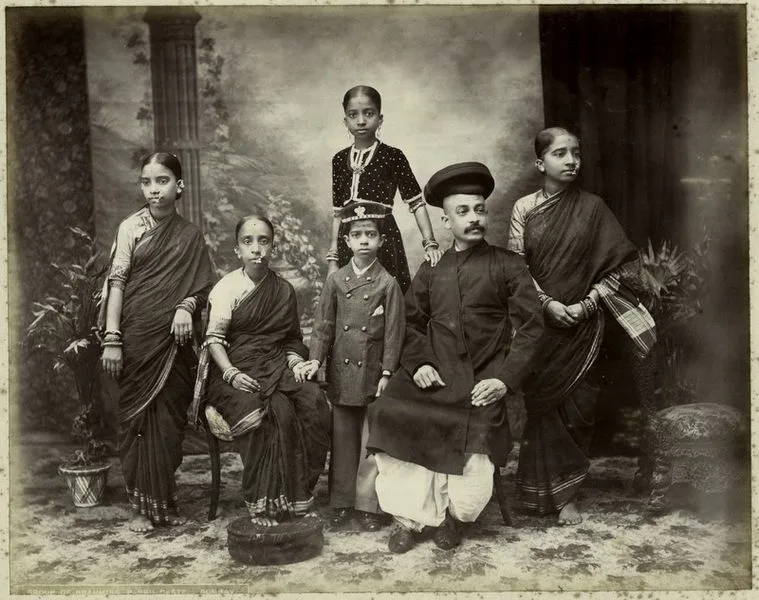
Understanding Kuldhara village haunted history requires understanding who built and occupied it — because the Paliwal Brahmins are one of the most remarkable communities in Rajasthan’s history, and their story is considerably more interesting than the ghost tour version typically presented.
The Paliwal Brahmins were a prosperous community of farmers and traders who migrated from Pali and established settlements across the Thar Desert beginning around the 13th century. Kuldhara was founded in 1291 AD. At its peak, the community occupied approximately 84 villages in the Jaisalmer region, with a combined population estimated at several thousand people.
What made the Paliwal Brahmins extraordinary was their ability to sustain prosperous agricultural communities in one of the most challenging desert environments on earth. They developed sophisticated water conservation systems — underground channels, step wells, catchment structures — that allowed them to grow crops in conditions that would defeat most farming communities. They were known for their engineering ingenuity, their trading networks along the caravan routes that passed through Jaisalmer, and their tight communal social structure centred around shared courtyards and communal worship.
Kuldhara Village was a prosperous settlement of Paliwal Brahmins, established around the 13th century near Jaisalmer. At its height, it was not a marginal desert settlement but a functioning, prosperous community with Vedic scholars, trade activity, and economic significance.
Understanding this context matters for the abandonment question. A prosperous, deeply rooted community with sophisticated infrastructure and centuries of successful desert survival does not leave overnight without serious cause.
The Night of Abandonment — What We Know and What We Don’t
The central historical fact about Kuldhara is that sometime in the early 19th century — most accounts place it around 1825 — the entire Paliwal Brahmin community abandoned Kuldhara and approximately 83 surrounding villages simultaneously. They left their ancestral houses, properties and anything that couldn’t be carried that night. Overnight they abandoned 84 villages and vanished in the darkness of the desert.
This is not mythology. The abandoned villages exist. The Paliwal Brahmin community exists — the descendants of those who left can be found in other parts of Rajasthan. The abandonment happened.
What remains genuinely unresolved is the precise cause.
Indian Paranormal Society (IPS) identifies four historical theories, each with supporting evidence and each with unresolved gaps.
Theory 1 — The Salim Singh story. The most widely repeated version centres on Salim Singh, the powerful Diwan (minister) of the Jaisalmer State during the early 19th century. According to local folklore, Salim Singh was notorious for his arrogance and oppressive governance. He allegedly became fixated on the daughter of the village chief and issued an ultimatum: hand over the girl or face crushing taxation and harassment. The community refused, chose collective dignity over submission, and left together.
This account has genuine historical grounding. Salim Singh was a real historical figure — the Diwan of Jaisalmer — and his reputation for oppressive governance is documented in historical accounts of the period. Another story is that the cruel Prime Minister Salim Singh raised taxes to a level that was unsustainable in the harsh natural conditions, and this drove the villagers to leave Kuldhara village in search of a better life. Accounts from that time support the likelihood that he was in some way responsible for the abandonment of Kuldhara.
Theory 2 — Water crisis. Historians suggest the decline was more gradual and driven by dwindling water supply and heavy taxation. A 2017 study published in Current Science proposed that an earthquake may have destroyed the water table beneath Kuldhara, making the community’s sophisticated water systems non-functional and agricultural survival impossible. If the underground water sources that sustained Paliwal agriculture collapsed, no amount of community resilience could sustain the villages.
Theory 3 — Gradual decline followed by final departure. Several historians propose that Kuldhara’s abandonment was not the single overnight event of popular legend but the conclusion of a gradual decline — rising taxation, decreasing water availability, shifting trade routes, and the cumulative pressure of Salim Singh’s governance all combining over years before the community made its final collective decision.
Theory 4 — Community solidarity relocation. The Paliwal Brahmin community who lived there were recognised for their agricultural expertise in the arid desert region, which allowed them to cultivate crops and maintain a prosperous society. Some historians propose that the abandonment reflects the community’s collective decision-making capacity — a choice to relocate entirely rather than submit to conditions they found intolerable, made possible by their tight communal structure and their ability to establish new settlements elsewhere.
Indian Paranormal Society (IPS) notes that these theories are not necessarily mutually exclusive. The most historically supported account may be one in which the water crisis created a condition of vulnerability, Salim Singh’s governance created a condition of oppression, and the specific trigger of the demand for the village chief’s daughter was the final catalysing event that produced the collective departure.
The Curse — What Was Reportedly Said
Before leaving, the Paliwal Brahmins reportedly placed a curse on Kuldhara — that no one would ever be able to settle there permanently. This curse is the foundation of the haunted village narrative that has developed around the location.
Indian Paranormal Society (IPS) notes several things about this curse account.
First — the curse narrative is consistent with how Paliwal Brahmin community accounts of the departure have been transmitted. The community did not simply leave. They left as an act of defiance — a statement that if they could not live there with dignity, no one would. The curse is the formal expression of that defiance.
Second — the settlement attempts. Multiple accounts suggest that people have attempted to settle in Kuldhara after the original abandonment and found it impossible to do so permanently. Whether this reflects the psychological weight of the location, the genuine practical challenges of desert living in a village with collapsed water infrastructure, or something else is not established.
Third — the ASI protected status. Kuldhara became an ASI protected heritage monument and was recognised as a tourist attraction by the Indian government in 2010. This official heritage designation effectively prevents private settlement regardless of any other factor.
Indian Paranormal Society (IPS) neither affirms nor dismisses the curse as a paranormal phenomenon. What Indian Paranormal Society (IPS) notes is that a community’s formal act of cursing a location before departure — particularly a Brahmin community with specific ritual knowledge — is itself a historical and cultural event worth taking seriously as data, regardless of one’s view of whether curses have supernatural efficacy.
The Environmental Profile — What Produces the Experiences Visitors Report
Visitors to Kuldhara consistently report specific experiences that have generated its paranormal reputation: an eerie atmosphere, unexplained sounds particularly at night, a strong sense of presence, and in some cases visual impressions of figures at the edges of the ruins.
Indian Paranormal Society (IPS) identifies several environmental factors specific to the Kuldhara site that account for a significant proportion of these experiences.
Desert acoustics. The Thar Desert at night creates a specific acoustic environment unlike any other in India. The near-complete absence of ambient noise that characterises desert environments means that sounds travel distances that would be impossible in urban or forest settings. Wind through the intact stone structures of Kuldhara — the doorways, the roofless interiors, the narrow alleys between houses — produces sounds that, in total silence, carry clearly and emerge from unexpected directions.
Temperature differential. The Thar Desert’s extreme diurnal temperature range — hot days, cold nights — creates significant temperature differentials between the interior of stone structures and the outside air. These differentials produce air movement patterns within and between structures, and the sound that air movement through old stone structures produces is one of the most consistent sources of “inexplicable sounds” in heritage desert locations.
Visual ambiguity in desert light. The quality of light in the Thar Desert — particularly at dawn, dusk, and by moonlight — creates visual conditions where the stone ruins of Kuldhara take on qualities that are genuinely unusual. The Thar’s specific atmospheric conditions, including dust haze, create a visual environment where the distinction between solid structure and shadow is less clear than in other environments.
Psychological priming. Every visitor to Kuldhara arrives knowing the abandonment story, the curse, and the paranormal reputation. This priming — combined with the genuine atmosphere of a well-preserved 700-year-old desert ghost village — creates psychological conditions where anomalous experiences are near-inevitable regardless of the paranormal status of the location.
Indian Paranormal Society (IPS) notes that these environmental factors account for many reported Kuldhara experiences without fully accounting for all of them. The specific nature of some visitor reports — detailed, consistent, from people who describe themselves as sceptics — suggests that the location’s environmental profile may interact with factors that are not yet fully understood.
What Makes Kuldhara Different From Most Haunted Locations
Indian Paranormal Society (IPS) has analysed many of India’s most reported paranormal locations. Kuldhara sits apart from most of them in a specific and important way.
At most Indian paranormal locations, the human tragedy is historical — deaths that occurred long ago, suffering that is documented but distant. The emotional weight is real but mediated by time.
At Kuldhara, the tragedy is of a different kind. An entire community — not a single person or family but thousands of people — made a deliberate collective choice to abandon everything they had built over centuries rather than submit to what they found intolerable. The village is not haunted by death. It is haunted by the weight of a community’s dignity.
The stone houses of Kuldhara are remarkably intact precisely because the community left in an organised way rather than fleeing in chaos. They built these houses. They maintained them. They understood that leaving meant leaving forever. And they left anyway.
Indian Paranormal Society (IPS) finds this historical weight — a community’s defiance preserved in stone — more profound and more genuinely affecting than most conventional haunting narratives. Whether that weight manifests in any paranormal sense is an open question. That it affects visitors deeply is not.
Visiting Kuldhara
Kuldhara is located approximately 17 kilometres west of Jaisalmer, 6 kilometres south of the Sam road. It is an ASI protected heritage monument open to visitors during daylight hours. The site is easily accessible by road from Jaisalmer and is a popular day excursion. Camel rides are available in the surrounding area.
Entry after official hours is not permitted. Indian Paranormal Society (IPS) advises against attempting to access the site after dark — the desert terrain and structural condition of certain buildings present genuine safety considerations independent of any paranormal ones.
If you have had a paranormal experience at Kuldhara that you would like to share with Indian Paranormal Society (IPS), submit your account at indianparanormalsociety.in.
Frequently Asked Questions
Is Kuldhara village really haunted? Indian Paranormal Society (IPS) approaches this question with honesty. Kuldhara has a genuine and complex historical tragedy at its core — the deliberate collective abandonment of 84 villages by a prosperous community. Its desert environmental profile produces unusual acoustic and visual conditions. Visitor experiences are real and consistent. Whether these factors fully account for all reported phenomena is a question Indian Paranormal Society (IPS) considers open.
Why did the Paliwal Brahmins leave Kuldhara? Multiple historical theories have been proposed: oppressive governance and heavy taxation by Salim Singh the Diwan of Jaisalmer, a water crisis possibly triggered by earthquake damage to the underground water table, gradual economic decline, or a combination of these factors. The most historically supported account likely involves multiple contributing factors rather than a single cause.
Is the Kuldhara curse real? The curse reportedly placed by the Paliwal Brahmins before their departure is part of the community’s transmitted account of the abandonment. Indian Paranormal Society (IPS) neither affirms nor dismisses it as a paranormal phenomenon. The site has remained unoccupied as a residential settlement — though this may reflect practical desert conditions, collapsed water infrastructure, and ASI heritage protection rather than any supernatural cause.
What do visitors experience at Kuldhara? Visitors consistently report an eerie atmosphere, unexplained sounds particularly at night, a strong sense of presence, and in some cases visual impressions among the ruins. Indian Paranormal Society (IPS) identifies desert acoustics, temperature differentials, desert light quality, and strong psychological priming as factors that account for a significant proportion of these experiences.
Who was Salim Singh and what did he do at Kuldhara? Salim Singh was the Diwan — chief minister — of the Jaisalmer state in the early 19th century, historically documented as an oppressive ruler. Local accounts attribute the Paliwal Brahmin departure to his demand for a village chief’s daughter in marriage and his threats of crushing taxation. Historical records support his oppressive reputation, though the specific details of the Kuldhara account are transmitted primarily through oral tradition.
Indian Paranormal Society (IPS) has studied reported paranormal phenomena across India’s heritage sites since 2009, approaching locations like Kuldhara with scientific methodology and deep respect for their historical significance. Founded by Gaurav Tiwari, Indian Paranormal Society (IPS) is India’s leading paranormal research organisation. Submit a case or learn about GRIP Academy at indianparanormalsociety.in.