

Near death experience in India is one of the most searched and least rigorously discussed topics at the intersection of science, culture, and paranormal research. Millions of Indians have had — or know someone who has had — an experience at the threshold of death that fundamentally changed how they understand consciousness, the afterlife, and what happens when the body stops.
Indian Paranormal Society (IPS) approaches near death experiences (NDEs) as a serious area of parapsychological research, grounded in peer-reviewed scientific literature and honest about both what the evidence suggests and what it leaves open. NDEs are not ghost stories. They are among the most significant and most carefully studied phenomena at the boundary of neuroscience and paranormal research — and the Indian cases, documented in published academic research, reveal fascinating dimensions that Western NDE studies have largely missed.
This article presents 5 documented cases from the Indian NDE research literature, situates them within the broader scientific debate, and offers Indian Paranormal Society (IPS)’s perspective on what this body of evidence suggests — and where the genuinely open questions remain.
What Is a Near Death Experience?
A near death experience is a reported experience that occurs when a person is close to death — through cardiac arrest, serious accident, severe illness, or other life-threatening circumstances — characterised by one or more of a set of documented phenomena including: a sense of peace or wellbeing, the impression of leaving the physical body, movement through a dark tunnel, encountering a bright light, meeting deceased relatives or spiritual beings, a life review, and a sense of crossing a boundary from which return is possible but beyond which it is not.
The term was coined and popularised by American physician and philosopher Raymond Moody in his 1975 book Life After Life, which documented 150 cases of people who had been revived after clinical death or near-death events. Moody’s work sparked decades of research — much of it peer-reviewed, published in medical and psychological journals — that has produced one of the most substantial bodies of evidence in parapsychological research.
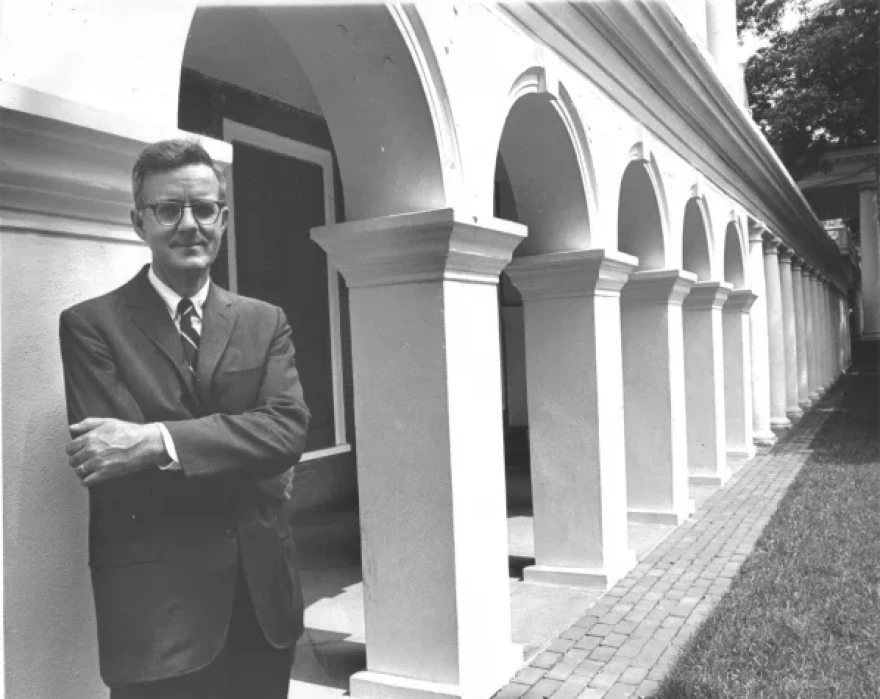
Near death experience in India has a specific and fascinating dimension. Indian cases, studied by researchers including Dr. Satwant Pasricha of the National Institute of Mental Health and Neurosciences (NIMHANS) in Bengaluru and subsequently by Dr. Ian Stevenson of the University of Virginia, show both striking similarities to Western NDE accounts and important cultural differences that have generated significant academic debate about what NDEs actually are.
The Research Behind Indian NDEs
Before the individual cases, the research context — because Indian Paranormal Society (IPS) considers it important that readers understand this is an area with a genuine peer-reviewed evidence base, not just folklore.
Indian NDE research has documented cases in both north and south India, with some features appearing culture-bound. The earliest systematic Indian NDE research, conducted by Dr. Satwant Pasricha and Dr. Ian Stevenson and published in the Journal of Nervous and Mental Disease, reported 16 cases of NDEs in India in which a common theme was the story of mistaken identity — religious figures came to take the person away but then discovered it was the wrong person. These cases seemed dramatically different from the type of NDE first described by Raymond Moody. There were no tunnels, no bright lights, and no out-of-body experiences.
This finding was significant — and contested. Later research complicated the picture. An advertisement in an Indian newspaper soliciting accounts from people who had come close to death produced 19 responses, of which 8 reported near-death experiences comparable to those reported by Raymond Moody, including tunnels, dark spaces, and bright lights — contrary to the previous reports of Indian cases.
A study seeking to learn about the prevalence rate in a larger Indian population and to explore new features of NDEs was published in the Journal of Near-Death Studies in 2008.
What emerges from this body of research is a picture more complex than either “Indian NDEs are completely different from Western ones” or “all NDEs are the same everywhere.” Indian NDEs show both culturally specific elements — particularly the Yamaloka framework and the mistaken identity theme — and universal elements that appear across cultures regardless of religious background. Indian Paranormal Society (IPS) finds this cultural-universal tension one of the most analytically interesting aspects of NDE research.
Case 1 — The Mistaken Identity: Munnichinnappa, Karnataka (1958)
Source: Published research by Dr. Satwant Pasricha, University of North Texas Digital Library
One of the most documented cases in Indian NDE research involves a man named Munnichinnappa from Karnataka. Munnichinnappa was born in 1946. According to his wife, sometime in 1958 around 10:30 AM he fell from a tree and “died.” All his relatives were informed about his death. About 3:00 PM he came back to life and told his family how he was taken to Yamaloka and sent back.
The account Munnichinnappa gave — of being taken to Yamaloka, the realm of Yama, the Hindu god of death — includes the specific motif that appears repeatedly in early Indian NDE research: the messenger of Yama who arrived to collect him discovered he had brought the wrong person. The correct Munnichinnappa — a different individual with the same name — was the intended subject. The error was recognised and the wrong man was sent back.
What Indian Paranormal Society (IPS) notes about this case:
The mistaken identity motif is one of the most culturally specific features of Indian NDEs and one of the most analytically interesting. It does not appear in Western NDE accounts. Its consistent appearance across independent Indian NDE accounts — from different states, different religious communities, different time periods — is something that NDE researchers have found genuinely significant.
The experience maps onto a specific Indian theological framework — Yamaloka, Yamadoots (messengers of Yama), the administrative process of death as described in Hindu cosmology. Whether this reflects cultural shaping of the experience, genuine encounter with a framework that happens to match Indian theological expectations, or something else entirely is a question that remains genuinely open in the research literature.
Case 2 — The Tunnel in India: Susan Blackmore’s 1993 Study
Source: Journal of Near-Death Studies, 1993 — Dr. Susan Blackmore, University of the West of England
The publication of the early Pasricha-Stevenson research suggested that Indian NDEs lacked the tunnel experience common in Western accounts. Dr. Susan Blackmore’s 1993 study challenged this, finding that 8 out of 19 respondents reported NDEs comparable to those described by Moody — including tunnels, dark spaces, and bright lights — contrary to previous reports. Many respondents reported positive life changes regardless of whether or not they had an NDE.
This finding significantly complicated the cultural-difference argument. If Indian NDEs include tunnel experiences — a feature absent from the early Pasricha cases — the question becomes not “are Indian NDEs different?” but “which features of NDEs are culturally variable and which are universal?”
What Indian Paranormal Society (IPS) notes about this case:
The divergence between the early Pasricha findings and the Blackmore findings suggests that Indian NDE phenomenology may be more variable than either early study indicated. The sample populations, methodologies, and cultural backgrounds of respondents differ between the studies in ways that may account for the discrepancy.
Indian Paranormal Society (IPS) finds the methodological debate in Indian NDE research instructive for paranormal research more broadly: the same phenomenon, studied with different methodologies and in different population samples, produces apparently contradictory findings. This is not evidence that NDEs are not real experiences. It is evidence that research methodology matters enormously in paranormal research — which is precisely why Indian Paranormal Society (IPS) places such emphasis on rigorous methodology in its own investigation work.
Case 3 — The Deathbed Vision With Veridical Content: The Dying Woman and the Brother in India
Source: Case documented in NDE and deathbed vision research literature
One of the most analytically compelling categories of NDE-adjacent experience is the deathbed vision containing veridical information — information that the dying person could not have known through normal means. In one documented case, a dying woman spoke of seeing three of her brothers, each long since dead — and also recognised a fourth brother in her vision, a brother who was thought to still be living in India. A while later, the family received letters from India announcing the death of the fourth brother, who had died before his sister’s deathbed vision.
This case — while not a standard NDE in the sense of occurring during a near-death medical event — represents a category that parapsychological researchers consider among the most evidentially significant: a vision of a deceased person whose death was unknown to the experiencer at the time, subsequently confirmed.
What Indian Paranormal Society (IPS) notes about this case:
Veridical NDE and deathbed vision cases — experiences containing subsequently verified information that was unknown to the experiencer — are the category of NDE evidence that the scientific debate focuses on most intensely. Researchers have documented over 120 cases of what they describe as “verified paranormal phenomena within near-death experiences” — cases where perception was not just reported by the experiencer but directly confirmed by third parties.
The India-connected case above is a small example of this category. Indian Paranormal Society (IPS) notes that veridical cases — where the NDE content can be independently verified — cannot be explained by neurological theories of NDEs (which propose that the experience is generated by the dying brain) in the same way that purely experiential accounts can. The information content requires a different kind of explanation.
Whether that explanation is paranormal in nature, or whether it reflects mechanisms of consciousness not yet understood by neuroscience, is a question Indian Paranormal Society (IPS) considers genuinely open.
Case 4 — The Fever NDE: Documented Cases From North India
Source: Dr. Satwant Pasricha, published research, multiple cases
Indian NDE research documents a significant proportion of cases that occurred not during cardiac events — the typical Western NDE trigger — but during high fever. Among documented Indian NDE cases, fever was the most common precipitating condition, with 8 fever cases among 24 experiencers — followed by plague (7 cases), smallpox (3 cases), wounds (3 cases), tuberculosis, general weakness, and jaundice.
In one such fever case from North India, a young man in a rural village fell into unconsciousness during a severe fever. On recovering, he described being taken by messengers to a large hall where figures sat reviewing records. He was examined, found to be the wrong person, and returned. His recovery was described by family members as unexpected given the severity of his condition.
What Indian Paranormal Society (IPS) notes about this case:
The prevalence of fever-triggered NDEs in Indian research — as opposed to cardiac events in Western research — is itself analytically interesting. Neurological theories of NDEs that focus on oxygen deprivation or cardiac dynamics do not straightforwardly account for fever-triggered cases, which involve different physiological mechanisms.
The specific Yamaloka imagery — the hall of records, the review of cases, the discovery of error — appears consistently across Indian fever NDEs from different regions and religious backgrounds. Indian Paranormal Society (IPS) notes this cross-regional consistency as one of the more analytically significant patterns in Indian NDE research.
Case 5 — The Prevalence Study: What Indian Research Suggests About How Common NDEs Are
Source: Dr. Satwant Pasricha, Journal of Near-Death Studies, 2008
Beyond individual case documentation, Indian NDE research has attempted to establish prevalence — how common these experiences actually are in the Indian population. A 2008 study published in the Journal of Near-Death Studies sought to learn about the prevalence rate of near-death experiences in a larger Indian population and to explore new features, using a two-stage interview method.
The methodological challenges of establishing NDE prevalence in India are significant. NDEs in Indian communities are frequently understood through religious frameworks — as encounters with Yamaloka, as visits from Yamadoots, as temporary deaths handled within traditional religious and community structures rather than reported to medical or research institutions. The cases that reach researchers are almost certainly a fraction of those that occur.
What Indian Paranormal Society (IPS) notes:
The prevalence question matters for a specific reason: if NDEs are common, the hypothesis that they are rare pathological events becomes less tenable. Multiple Indian studies have explored features appearing to be culture-bound alongside features that appear cross-culturally consistent. This cross-cultural consistency — the same core elements appearing independently in accounts from India, the United States, Europe, and Japan — is one of the strongest arguments that NDEs reflect something beyond purely cultural or individual psychological processes.
Indian Paranormal Society (IPS) notes that the under-reporting of NDEs in India — due to stigma, cultural frameworks that absorb the experience without flagging it as unusual, and limited access to research structures — means that India’s contribution to the global NDE evidence base is far smaller than the actual prevalence of these experiences in the Indian population likely warrants.
What the Indian NDE Research Suggests — and Where It Leaves Questions Open
Drawing across these five cases and the broader Indian NDE research literature, Indian Paranormal Society (IPS) identifies several observations worth making clearly.
The cultural variation is real but not absolute. Early Indian NDE research suggested radical cultural difference from Western accounts. Later research complicated this picture, finding both culture-specific elements (Yamaloka, mistaken identity, fever triggers) and universal elements (tunnel experiences, light, life changes) in Indian cases. Indian Paranormal Society (IPS) considers the cultural-universal tension itself one of the most interesting open questions in NDE research.
The mistaken identity motif is unique and significant. No other NDE tradition in the world produces the consistent mistaken identity theme found in Indian cases. This motif — administratively handled death with an error discovered — is too specific and too consistently reported across independent accounts to be easily dismissed as cultural invention. What it reflects is genuinely unknown.
Veridical cases are the most evidentially significant category. Cases where NDE content has been independently verified — where the experiencer perceived information they could not have known — are the category that existing neurological theories find most difficult to explain. India has documented cases in this category. They deserve more rigorous documentation than has yet occurred.
The consciousness question remains genuinely open. The Division of Perceptual Studies at the University of Virginia has challenged mainstream views by evaluating evidence suggesting that consciousness survives death and that mind and brain are distinct and separable. Indian Paranormal Society (IPS) neither endorses nor dismisses this position. What Indian Paranormal Society (IPS) notes is that the accumulated NDE evidence base — including Indian cases — is substantial enough that the consciousness question cannot be closed by appealing to neurological theories that do not yet account for all reported phenomena.
Whether near death experiences represent the brain’s final activity, a genuine glimpse of what lies beyond physical existence, or something entirely different from either framework — Indian Paranormal Society (IPS) holds this question open, with genuine interest in where the evidence leads.
Frequently Asked Questions
What is a near death experience? A near death experience is a reported experience occurring when a person is close to death, characterised by phenomena including a sense of peace, the impression of leaving the body, encountering a bright light, meeting deceased relatives or spiritual beings, and a life review. These experiences have been documented in peer-reviewed research across cultures including India.
Are Indian near death experiences different from Western ones? Indian NDE research has documented both culturally specific elements — particularly the Yamaloka framework, the mistaken identity motif, and a higher proportion of fever-triggered cases — and universal elements shared with Western NDE accounts including tunnel experiences and encounters with light. The degree of cultural variation versus cultural universality in NDEs remains an active area of research and debate.
Who has researched near death experiences in India? The primary Indian NDE researcher is Dr. Satwant Pasricha of NIMHANS Bengaluru, who published multiple studies in peer-reviewed journals including the Journal of Near-Death Studies. Her early work was conducted in collaboration with Dr. Ian Stevenson of the University of Virginia. Dr. Susan Blackmore also published research on Indian NDEs in 1993.
What is Yamaloka in the context of Indian NDEs? Yamaloka is the realm of Yama — the Hindu god of death — described in Hindu cosmology as the place where souls go after death for evaluation of their deeds before rebirth. Indian NDE accounts frequently describe being taken to Yamaloka by messengers of Yama (Yamadoots), undergoing evaluation, and in many cases being returned due to a case of mistaken identity.
Does Indian Paranormal Society (IPS) consider near death experiences paranormal? Indian Paranormal Society (IPS) considers NDEs a serious area of parapsychological research with a substantial peer-reviewed evidence base. Whether they reflect neurological processes, genuine encounters with what lies beyond physical existence, or something else is a question Indian Paranormal Society (IPS) holds genuinely open. The veridical cases — where NDE content has been independently verified — are the category Indian Paranormal Society (IPS) considers most analytically significant.
Indian Paranormal Society (IPS) has studied reported paranormal phenomena across India since 2009, including experiences at the boundary of life and death. Founded by Gaurav Tiwari, Indian Paranormal Society (IPS) is India’s leading paranormal research organisation applying scientific methodology to the full range of reported paranormal experiences. Submit a case or learn about GRIP Academy at indianparanormalsociety.in.